Environmental perception of social actors of the community La Aplastada Arriba in the application of agro-ecological practices
Article Sidebar
Main Article Content
Abstract
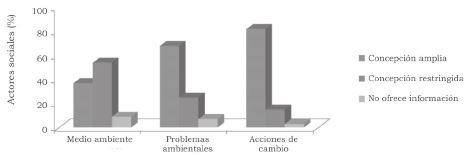
The research was carried out in the community “La Aplastada Arriba”, Guisa, Granma, with the objective of assessing the environmental perception of social actors on the application of agroecological practices as a productive action of favorable changes in the ecosystem. An initial diagnosis was made by the farms to detect the existing problems, using the observation and application of semi-structured interviews. Training (theoretical-practical) for the use of agroecological actions and restoration of the ecosystem were developed. The results showed that 91% of the community members have a perception about the environment, 30% know the agroecological techniques and the importance of their use, only 10% apply them in their land and refer their relationship with the improvement of the soil, crop diversification and conservation of natural resources.
Downloads
Article Details

This work is licensed under a Creative Commons Attribution-NonCommercial 4.0 International License.
Those authors who have publications with this journal accept the following terms of the License Attribution-NonCommercial 4.0 International (CC BY-NC 4.0):
You are free to:
- Share — copy and redistribute the material in any medium or format
- Adapt — remix, transform, and build upon the material
The licensor cannot revoke these freedoms as long as you follow the license terms.
Under the following terms:
- Attribution — You must give appropriate credit, provide a link to the license, and indicate if changes were made. You may do so in any reasonable manner, but not in any way that suggests the licensor endorses you or your use.
- NonCommercial — You may not use the material for commercial purposes.
- No additional restrictions — You may not apply legal terms or technological measures that legally restrict others from doing anything the license permits.
The journal is not responsible for the opinions and concepts expressed in the works, they are the sole responsibility of the authors. The Editor, with the assistance of the Editorial Committee, reserves the right to suggest or request advisable or necessary modifications. They are accepted to publish original scientific papers, research results of interest that have not been published or sent to another journal for the same purpose.
The mention of trademarks of equipment, instruments or specific materials is for identification purposes, and there is no promotional commitment in relation to them, neither by the authors nor by the publisher.
How to Cite
References
Alea, G.A. 2005. Introducción a la psicología ambiental. Universidad de Pinar del Río, Cuba. Disponible en: http://www.monografias.com/trabajos26/psicologia-ambiental/psicologia-ambiental.html. Accedido: enero 2008. 12 p
Altieri, M.A., Rosset, P. 1995. Agroecology and the conversion of large scale conventional systems to sustainable management. International Journal Environmental Studies (GB) (In press). 235 p.
Alvarado, F., Wiener, H. 1998. Ofertas agroecológicas para pequeños agricultores. Doce experiencias exitosas de Agricultura Ecológica. Centro IDEAS. p. 43-55.
Ceballo, A. 2015. Agroecología un modelo Sustentable de Vida. Edición digital del periódico Granma, órgano oficial del Comité Central del Partido Comunista de Cuba. http://www. granma.cu/cuba/2015-02-03/agroecologia-un-modelo-sustentable-de-vida. Consultado 24 de Marzo de 2015
CIPS-CIGEA. 2000. Metodología para el estudio de las percepciones ambientales. Ciudad de La Habana. Inédito. 4 p.
CITMA. 2010. Ley de Medio Ambiente (Ley 81). Ministerio de Ciencia Tecnología y Medio Ambiente. Ciudad de La Habana. Editorial Dirección de Política Ambiental. 55 p.
CLADES. 1998. Agroecología y Desarrollo Rural para Maestros Rurales. Curso en la modalidad de Educación a distancia. Módulo II. p. 95-99.
Expósito, M. 2003. Diagnóstico rural participativo. Una guía práctica. Centro Cultural Poveda. Santo Domingo, Republica Dominicana. 118 p.
Fajardo, O., Fernández, I. 2012. Diagnóstico del agroecosistema cafetalero de la CPA Esteban Caballero. Revista Café Cacao (CU) 11(1): 59-66.
Fernández, M.Y. 2008. Estudios sobre Estado y Sociedad. Espiral (MX) XV(43):179-194, Septiembre /Diciembre.
Florian, E., et al. 2010. Efecto de la complejidad estructural y el contexto paisajístico en la avifauna de sistemas agroforestales cafetaleros dentro del corredor biológico volcánica Central-Talamanca, Costa Rica. Revista Mesoaméricana (CR) 14(3): 65-72, noviembre.
López, 2015. La actividad antrópica en la evolución de un ecosistema cafetalero en la zona de Macanacú, municipio Guisa. Memorias IV Congreso Internacional de Agricultura en ecosistemas Frágiles y Degradados. II Simposio: Gestión ambiental en agroecosistemas. 8 p.
Molina, Y., Santos, W., Sosa, A., Hechavarría, O. 2011. Percepción ambiental por los actores sociales de la reserva ecológica El Gigante. Revista Forestal Baracoa (CU) 30(1):79-86, enero-junio.
Perera, A. 1996. Proceedings of Eighth Meeting of Caribbean Foresters at Grenada. Ed.: Puerto Rico Conservation Foundation/International Institute of Tropical Forestry/ United States Department of Agriculture Forest Services. Puerto Rico. Jun 3-7. p. 27-29.
Tejeda, C., Silva, E., Barton, J.R., Sutherland, W.J. 2010. Why shade coffee does not guarantee biodiversity conservation. Ecology and Society (CA) 15(1): 13, marzo.