Influence of the diameter of the stake and use of cover in the establishment of nursery Trichanthera gigantea (Humboldt & Bonpland) Nees
Article Sidebar
Main Article Content
Abstract
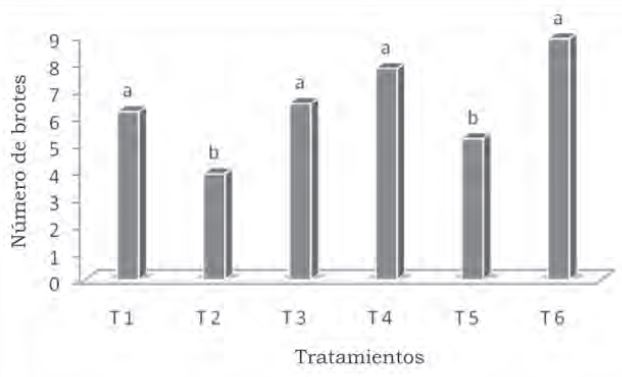
The study and inclusion of multipurpose tree species under the conditions of our country is a challenge for researchers and producers. In Placetas a study on the spread of Trichanthera gigantea to get the dimension appropriate of the diameter of the stake and know how to influence the cover, the propagation of the species in the nursery. The studied treatments were six. Cuttings were planted in polyethylene bags containing 70 % soil and 30 % organic matter. We used a completely randomized design according bifactorial (3 x 2). The variables studied were percent survival, number of shoots, issuance of the first leaf, number and length of the leaves, the best results were obtained in the treatments 1, 3, 4 and 6 and the condition of darkness presented the best answer for the studied variables, in the different diameters of stakes of Trichanthera gigantea.
Downloads
Article Details

This work is licensed under a Creative Commons Attribution-NonCommercial 4.0 International License.
Those authors who have publications with this journal accept the following terms of the License Attribution-NonCommercial 4.0 International (CC BY-NC 4.0):
You are free to:
- Share — copy and redistribute the material in any medium or format
- Adapt — remix, transform, and build upon the material
The licensor cannot revoke these freedoms as long as you follow the license terms.
Under the following terms:
- Attribution — You must give appropriate credit, provide a link to the license, and indicate if changes were made. You may do so in any reasonable manner, but not in any way that suggests the licensor endorses you or your use.
- NonCommercial — You may not use the material for commercial purposes.
- No additional restrictions — You may not apply legal terms or technological measures that legally restrict others from doing anything the license permits.
The journal is not responsible for the opinions and concepts expressed in the works, they are the sole responsibility of the authors. The Editor, with the assistance of the Editorial Committee, reserves the right to suggest or request advisable or necessary modifications. They are accepted to publish original scientific papers, research results of interest that have not been published or sent to another journal for the same purpose.
The mention of trademarks of equipment, instruments or specific materials is for identification purposes, and there is no promotional commitment in relation to them, neither by the authors nor by the publisher.
How to Cite
References
aceRo, l e. 2005. Árboles de la zona cafetalera Colombiana. Colombia. Ediciones Fondo Cultural Cafetero, 268 p.
Blanco F. 2007. Efecto de la sombra sobre las plantas forrajeras en sistemas silvopastoriles. Conferencia para Curso de Diplomado en Silvopastoreo. EEPF Indio Hatuey. Sin publicar, mimeografiado.
Bravo, O., et al. 2008. Estudio de diferentes métodos de propagación de morera (Morus alba) y nacedero (Trichanthera gigantea) para la alimentación animal. IV Taller Provincial “Por una agricultura sustentable, en armonía con el medio ambiente”. Año 2008. Publicado en: CD de la REPPAL y Editorial “Samuel Feijoo”. ISBN: 978-959-250-569-8.
Caballero, C., et al. 2006. Efecto del grosor del esqueje de morera (Morus alba) y el nacedero (Trichanthera gigantea) sobre su comportamiento durante los primeros 60 días de plantadas. Disponible en http://www.fao.org/WAICENT/FAOINFO/AGRICULT/AGA/AGAP/FRG/AFRIS/espanol/Document/Morera/ principal.htm. Consultado el 27 de noviembre de 2012.
Cipagauta, M., Velásquez, J.E., Gómez, J.E. 1999. Estrategias de Implementación y Experiencias Agrosilvopastoriles con Pequeños Productores en el Pie de monte Amazónico Colombiano. En: Primer Congreso Latinoamericano de Agroforesteria para la Producción Animal Sostenible. Disponible en http://www.cipav.org.co/redagrofor/memorias99/Cipagaut. htm. Consultado el 27 de noviembre de 2012.
Galindo, W. F., et al. 1989. Sustancias antinutricionales en las hojas de guamo, nacedero y mata ratón (en línea) CIPAV, Cali, Colombia. Disponible en: http://www.sian.info.ve/porcinos/publicaciones/lrrd1/1/cont11.htm. Consultado el 27 de noviembre de 2012.
Gómez, M., et al. 2002. Árboles y Arbustos Forrajeros Utilizados en Alimentación Animal como Fuente Proteica Matarratón (Gliricidia sepium), Nacedero (Trichanthera gigantea), Pízamo (Erythrina fusca) y Botón de oro (Tithonia diversifolia). Cipav, Colciencias, Pronatta. Cali - Colombia. 171 Pág.
González, M., Mosquera, A., Bravo, O. 2009. El Nacedero (Trichanthera gigantea), planta promisoria para la producción animal en la Agricultura Urbana. IV Encuentro Internacional por el Desarrollo Forestal Sostenible, DEFORS´2009. Publicado en: CD “Memorias del Evento”. ISBN: 978-959-713989-8.
Infostat (2008). InfoStat, versión 2008. Manual del Usuario. Grupo InfoStat, FCA, Universidad Nacional de Córdoba. Primera Edición, Editorial Brujas Argentina.
Jaramillo, P.H., Rivera, P.E. 2001. Efecto del tipo de estaca y la densidad de siembra sobre el establecimiento y producción inicial de nacedero Trichanthera gigantea Humbold & Bonpland. Colombia. 90 h. Tesis (en opción al título de Máster en Zootecnia)--Universidad Nacional de Colombia.
Moreno, F., Guerrero, A. 2003. Evaluación de la brotación de Trichantera gigantea (Bonpl.) Nees, como estrategia para su propagación vegetativa. Revista Forestal Venezolana (VE). 47 (1).
Nhan, N.T.H., et al. 1996. Effect of shade biomass production and composition of the forage treeTrichanthera gigante. Live-stock Research for Rural Development. Disponible en http:// www.cipav.org.co/lrrd/lrrd8/2/nahn.htm. Consultado el 27 de noviembre de 2012.
Sarría P., Evillavicencio Y Orejuela, L.E. 2001. Utilización de forraje de Nacedero (Trichanthera gigantea) en la alimentación de cerdos de engorde CIPAV, Cali, Colombia. Disponible en: http://www.cipav.org.co/lrrd/lrrd3/2/cont32.htm. Consultado el 27 de noviembre de 2012.