TRANSFORMACIÓN MECÁNICA DE LA MADERA CON BAJO IMPACTO AMBIENTAL
Article Sidebar
Main Article Content
Abstract
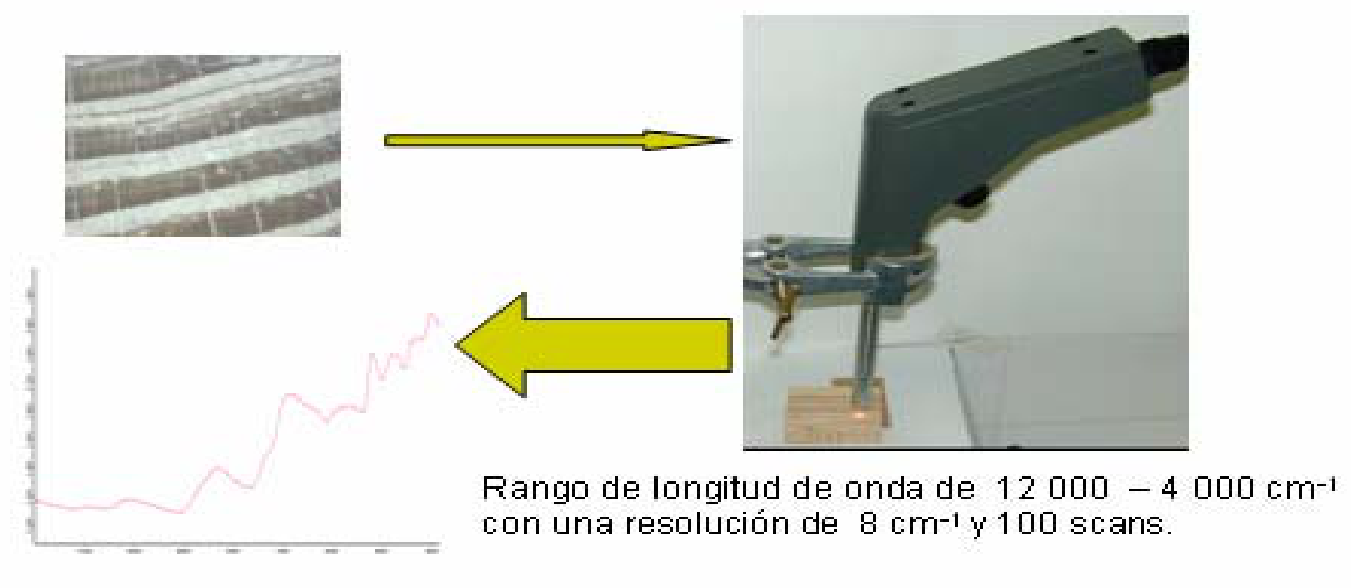
With the aim at elevating the efficiency of the mechanical transformation of Wood, both primary and secondary, mathematics is being used as tool, and this facilitates the improvement at timber sawing and the elaboration at furniture and pieces made at wood board at some species which are used for making furniture. This will add value to our natural resources. Witch the use of infrared spectroscopy an estimation of wood
qualities and variation can be done, for example, the direction between the pith and the
cortex, with, it would be easier to create the necessary conditions which are necessary for the orientation of sketches of sawing which permit the reduction of wood deformation. This will the wood pieces are in service, this will increase the efficience of the sawing process with a 13% wood sawing, and this signifies a profit of more than 300000 dollars of the raw material (wood/timber) in the Pinar del Rio sawmills. Meanwhile with the technology at producing furniture, more than 50 pieces can be produced from each meter cubed (m3), this is equivalent to a profit of more 8500 pesos. The implementation of the results obtained helps to reduce the necessity to use more than contributes in the forest which indeed contributes in the conservation of the environment.
Downloads
Article Details

This work is licensed under a Creative Commons Attribution-NonCommercial 4.0 International License.
Those authors who have publications with this journal accept the following terms of the License Attribution-NonCommercial 4.0 International (CC BY-NC 4.0):
You are free to:
- Share — copy and redistribute the material in any medium or format
- Adapt — remix, transform, and build upon the material
The licensor cannot revoke these freedoms as long as you follow the license terms.
Under the following terms:
- Attribution — You must give appropriate credit, provide a link to the license, and indicate if changes were made. You may do so in any reasonable manner, but not in any way that suggests the licensor endorses you or your use.
- NonCommercial — You may not use the material for commercial purposes.
- No additional restrictions — You may not apply legal terms or technological measures that legally restrict others from doing anything the license permits.
The journal is not responsible for the opinions and concepts expressed in the works, they are the sole responsibility of the authors. The Editor, with the assistance of the Editorial Committee, reserves the right to suggest or request advisable or necessary modifications. They are accepted to publish original scientific papers, research results of interest that have not been published or sent to another journal for the same purpose.
The mention of trademarks of equipment, instruments or specific materials is for identification purposes, and there is no promotional commitment in relation to them, neither by the authors nor by the publisher.
How to Cite
References
Acuña, M. A. 2006. Wood properties and use of Sensor technology to improve optimal bucking and value recovery of Douglas fir. Doctoral thesis. Oregon State University. 166 p.
Alvarez, D., Egas, F. A., Esteves, I., Chavez, P., Garcia, J. M. 2003. Análisis matemático para elevar la eficiencia en los aserraderos. Revista Chapingo. Serie Ciencias Forestales y del Ambiente. 2003. No. IX 79-99.
Birkett, M. D., and Gambino, M.J.T. 1998. Potential applications for near-infrared spectroscopy in the pulping industry. Pap. S. Afr. Nóbel ver/December: 34–38. González, Inés. 2008. Análisis de las deformaciones de la Madera. Tesis presentada para optar por el grado científico de Doctor en Ciencias Forestales. Universidad de Pinar del Río, Cuba. 100 p.
Jones, P. D., Schimleck, L. P., Peter, G. F., Daniels, R. F., Clark III, A. 2005. Non-destructive estimation of Pinus taeda L. wood properties for samples from a wide range of sites in Georgia. Can. J. For. Res. (35): 85–92
Klinger, R., Johansson, M., Perstorper, M., Johansson, G. 2003. Distortion of Norway spruce timber. Holz als Werkstoff (61): 241-250
Ormarsson, S. 1999. Numerical Analysis of Moisture-Related Distortion in Sawn Timber Chalmers. University of Technology. Canada p. 35
Schimleck, L.R., Mora, C., and Daniels, R.F. 2003. Estimation of the physical wood properties of green Pinus taeda radial samples by near infrared spectroscopy. Can. J. For. Res. 33: 2297–2305
- Vignote, S., Jiménez, F, J. 1996. Tecnología de la Madera. Editorial Mundi-Press. Madrid. España.